Travel
The Train Travel Revival: Which Routes Are Worth the Extra Time
By Alex Thornton · 2026-04-14 · 7 min read
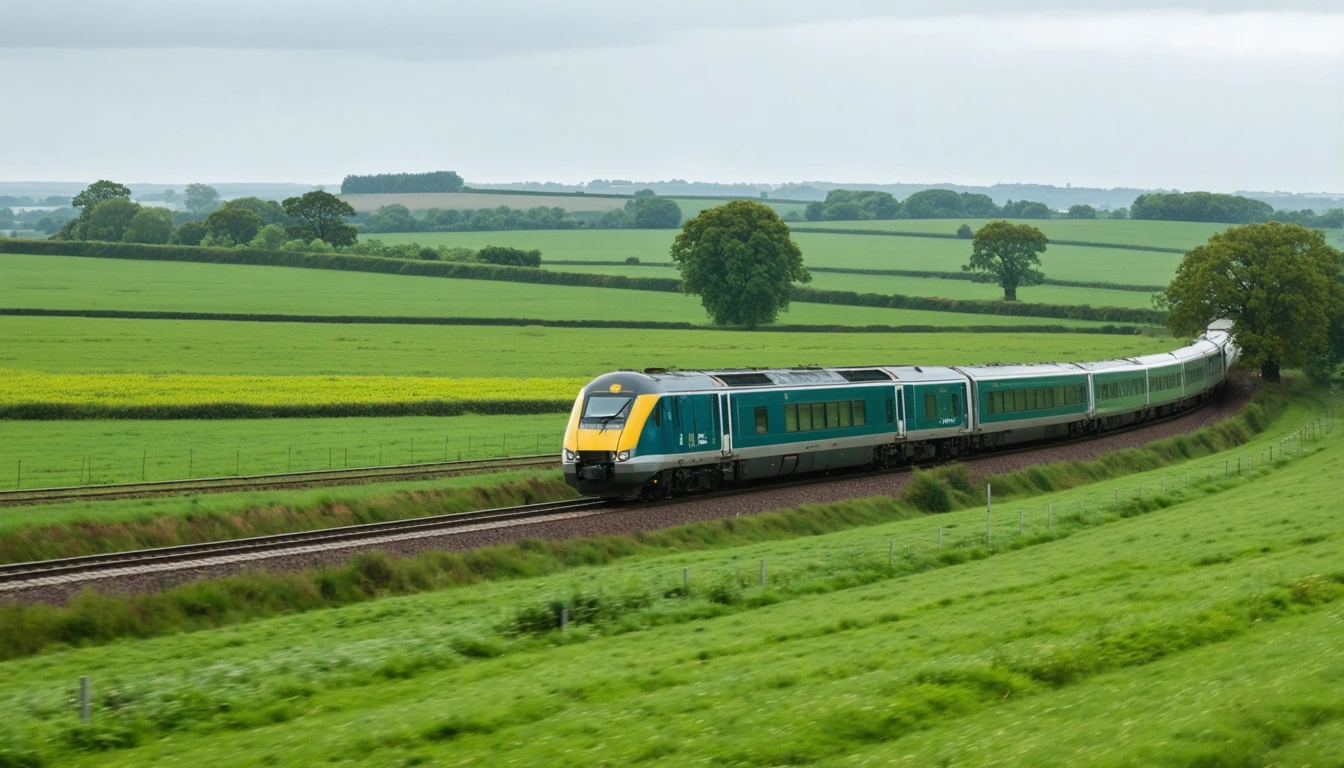
The train journey between London and Edinburgh is four and a half hours by the east coast main line. The equivalent flight — accounting for check-in, security, the time to reach the airport, and the transfer from Edinburgh Airport to the city centre — is not much shorter, and considerably more unpleasant.
This arithmetic has been discussed in travel writing for years, but it has gained new resonance as the environmental cost of aviation has become a more active consideration for a portion of British travellers, and as the experience of city-centre-to-city-centre rail travel has improved on certain routes. The question is not whether train travel is theoretically preferable in some cases, but where it actually makes practical sense.
The Routes Where the Case Is Clearest
The London to Edinburgh route is the canonical example. The train drops you at King's Cross and picks you up at Edinburgh Waverley — both central, both well connected to city transport. The journey itself, along the east coast, passes Peterborough, York, and Newcastle with reliable connectivity, dining car options, and the ability to work, read, or simply look at the landscape through a large window. The carbon calculation heavily favours train over flight.
London to Manchester and London to Bristol are faster still, and neither journey has a plausible air alternative. These routes have seen consistent ridership growth on the better-performing operators, driven partly by business travel where the ability to work on the train converts journey time into productive time.
London to Paris via Eurostar sits in its own category. The two hours and fifteen minutes from St Pancras to Gare du Nord is simply faster than flying door to door, without any of the security theatre of modern airport experience. The route is frequently cited in surveys as among the most positively experienced rail journeys in Europe.
The Routes Where the Calculation Is Less Clear
Long-distance routes to the south-west — Cornwall, in particular — are significantly slower than the equivalent journey would be in France or Germany, where high-speed infrastructure covers more of the network. London to Penzance takes around five hours; the journey involves no high-speed sections beyond the Reading stretch. The scenery is exceptional, and the experience is pleasant by rail standards, but the time cost is genuine.
The same applies to routes requiring changes — particularly those to more remote parts of Scotland, Wales, or the north of England served by branch or regional lines. These journeys can be rewarding in their own right; the Settle to Carlisle line through the Yorkshire Dales, or the journey across the West Highland Line, are experiences in themselves. But they are not time-competitive with driving, and framing them purely as transport misses what they actually offer.
The train works best when the destination is city-centre and the journey time is genuinely comparable to the alternative, or when the journey itself is the experience.
Booking and Getting Value
UK rail pricing is complex by international standards, but the core principle is consistent: book early and choose Advance fares for major intercity journeys, and the cost drops substantially relative to walk-on prices. The booking window for the lowest Advance fares is typically eight to twelve weeks before departure, though this varies by operator and route.
Railcards — including the 16-25 Railcard, the 26-30 Railcard, the Senior Railcard, and the Network Railcard for commuters in the south-east — provide a fixed percentage discount on most fares and frequently pay for themselves on a single return journey. The National Rail website and Trainline both allow comparison of fares across booking windows.
For overnight journeys — the Caledonian Sleeper to Scotland is the main option in the UK — the experience is meaningfully different from daytime travel, and the combination of departure and arrival times means no accommodation cost for one night of the trip.
The Broader Shift
There is a tangible shift in how some younger British travellers frame long journeys. The flight-shaming debate has been imperfect and sometimes counterproductive in its framing, but the underlying observation — that a significant portion of short-haul European flying has a plausible train alternative — has gained more traction than the counter-argument that it is purely a matter of individual choice.
The infrastructure investment required to make the train genuinely competitive on more UK routes is substantial and contested. What exists now works well on the routes where it works — and for weekend travellers, those routes cover a meaningful range of destinations.