Food
Slow Cookers: A Beginner's Guide to Actually Using One Daily
By James Whitmore · 2026-04-18 · 7 min read
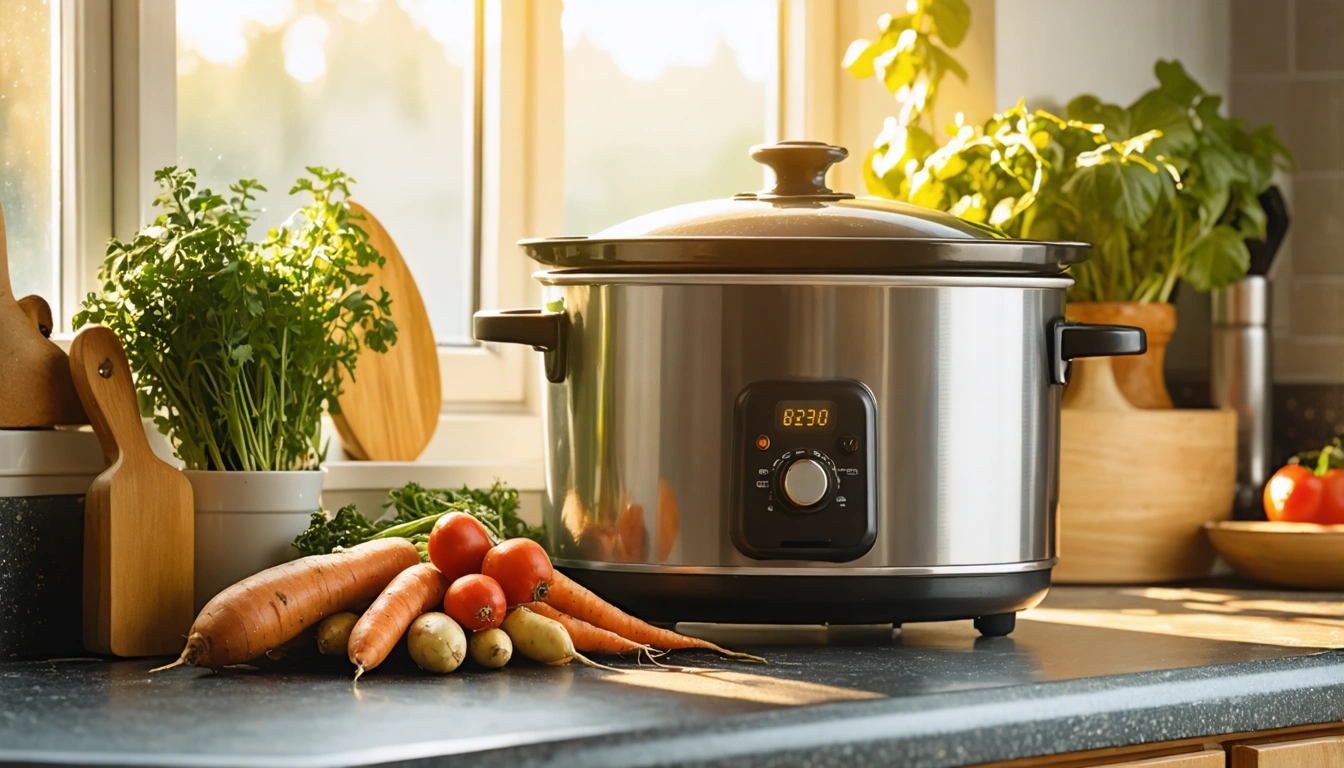
The slow cooker's main virtue is not the quality of what it produces — though that is often genuinely good — but the fact that it requires you to be somewhere else while it works.
For households where the person responsible for dinner also works full time, slow cooking provides something genuinely useful: a meal that has been cooking for eight hours by the time you arrive home. The list of what works well in a slow cooker is long, the list of what does not is short, and the practical technique is considerably less demanding than most recipe writing suggests.
1. Understanding the Basic Principle
A slow cooker maintains a consistent low temperature — typically between 75°C and 95°C depending on the setting — for an extended period. This is not the same as cooking at a low oven temperature: slow cookers are sealed, so moisture cannot escape, and the wet environment means that collagen in tougher cuts of meat breaks down over time into gelatine, which is what creates the characteristic texture of a good slow-cooked dish.
The practical implication is that slow cookers work best with tough, cheap cuts (shoulder, shin, cheek, brisket) and not at all well with tender cuts that would dry out under extended heat. A slow-cooked beef brisket after eight hours is excellent; a slow-cooked fillet steak would be a waste of both the appliance and the meat.
2. What to Cook First
For someone new to slow cooking, three dishes cover the essential principles and produce reliably good results:
Chilli con carne: Brown beef mince in a frying pan first (this is one of the few cases where pre-browning genuinely changes the result), add tinned tomatoes, kidney beans, stock, and spices, and cook on low for six to eight hours. The result is better than stovetop chilli — the flavours integrate more completely.
Pulled pork shoulder: A pork shoulder joint, seasoned, placed on a bed of chopped onion with a cup of stock, cooked on low for eight to ten hours. The meat falls apart entirely and requires only shredding. This reliably produces a result that rewards a degree of patience with the initial shopping that cheaper alternatives cannot match.
Root vegetable soup: Carrots, parsnips, onion, garlic, stock, and seasoning, cooked for six hours, then blended. The extended cooking time develops a sweetness in root vegetables that shorter methods cannot achieve.
3. The Browning Question
Many slow cooker recipes instruct you to brown meat before adding it. The honest answer is: it makes a genuine difference to some dishes and almost no difference to others.
For dishes where the surface caramelisation contributes meaningfully to flavour — beef stews, braised lamb — browning matters. For dishes where the flavour comes primarily from the sauce or marinade — chillies, curries, pulled meats in rich sauces — it is less critical. If time is the constraint, skip browning for the sauce-heavy dishes and apply it to the more refined braises.
The slow cooker fits working routines because it requires decision-making in the morning, not in the evening. Preparation before work takes 10–15 minutes; arriving home to a finished dinner changes the shape of an evening.
4. Adapting Conventional Recipes
Converting a standard casserole or stew recipe to slow cooker use follows a consistent logic: reduce the liquid by roughly a third (because slow cookers generate condensation that adds liquid rather than losing it to evaporation), extend the time significantly (stovetop one hour ≈ slow cooker four to five hours on high, six to eight hours on low), and add dairy, fresh herbs, and delicate vegetables in the last 30 minutes rather than at the start.
Most casserole, tagine, soup, and curry recipes convert reliably using these adjustments.
5. Practical Considerations for UK Kitchens
Slow cookers use relatively little electricity compared to an oven — a typical 3.5 litre slow cooker consumes around 150–200W on the low setting, which over eight hours amounts to a modest energy cost. In the context of current UK energy prices, this is an argument in their favour compared to extended oven use.
The main practical constraint is size. A 3.5 to 4.5 litre slow cooker suits households of two to four people for most dishes. Larger households, or those who want to produce batch quantities for freezing, benefit from the 6 to 7 litre options, which are also useful for larger joints of meat.
6. What Does Not Work
For completeness: pasta and rice become unpleasantly soft in a slow cooker unless added in the final 30 minutes or cooked separately. Fish cooks too quickly to benefit from slow cooking in most cases. Leafy greens lose their colour and texture entirely. Dishes that depend on the Maillard reaction for their character — a seared steak, a roast chicken — cannot replicate that character from the inside of a sealed ceramic pot.
These are narrow limitations for what is otherwise a very versatile piece of equipment.